The Difference Between a Job and a Mission in Catholic Education
Career decisions in Catholic schools, dioceses, and ministries are rarely just about titles or advancement. They are often rooted in purpose, service, formation, and impact.
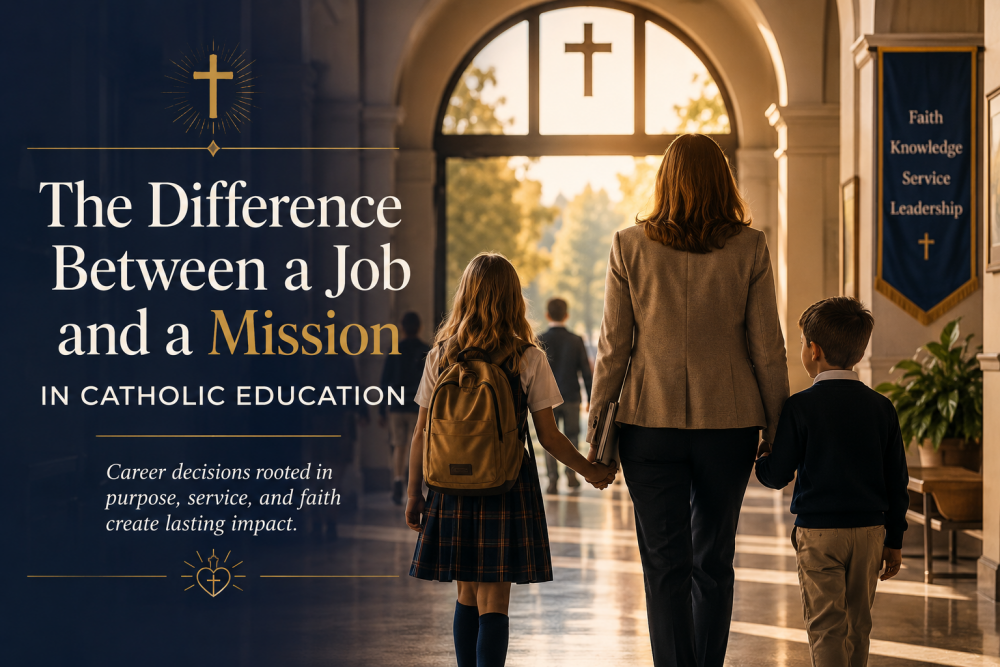
For many professionals working in Catholic schools, dioceses, and ministries, career decisions are rarely just about compensation, titles, or advancement. They are often rooted in something deeper: purpose, service, formation, and impact.
That is especially true in Catholic education, where leadership and professional roles are connected to shaping lives, strengthening communities, and advancing the mission of the Church.
Yet one of the biggest challenges many candidates face is discerning the difference between simply taking a new job and responding to a genuine vocational opportunity.
A Career Move Is More Than a Resume Decision
In today’s employment market, professionals are constantly approached about new opportunities. Some may offer higher salaries, larger institutions, or more visibility. But mission-driven professionals often ask different questions:
These are not small questions. They are foundational questions.
In Catholic education and ministry, the right opportunity should align both professional strengths and personal values.
Looking for mission-driven work?
Explore open roles with Catholic schools, dioceses, ministries, and mission-centered organizations.
Browse Catholic Job HubMission Alignment Matters
Mission alignment does not mean perfection. Every institution has challenges. Every school or ministry is navigating pressures related to enrollment, staffing, finances, governance, or culture.
What matters is whether leaders and communities are honestly striving toward a shared mission.
Candidates who thrive long term are usually those who resonate deeply with the institution’s mission and direction.
Discernment Requires Listening
One of the most overlooked parts of a search process is the candidate’s own discernment.
Too often, candidates focus exclusively on impressing interview committees without taking sufficient time to evaluate whether the opportunity truly fits their gifts, family, leadership style, and long-term aspirations.
The best search processes create space for both sides to discern thoughtfully.
The Best Leaders Often Feel Called
Many Catholic school leaders describe their transition into leadership not simply as a promotion, but as a calling.
That does not mean the process is easy. Leadership transitions often involve uncertainty, sacrifice, and courage. But great leaders frequently recognize moments when they feel invited to use their experience and gifts in new ways.
Many outstanding leaders were not actively seeking a new role when the right opportunity appeared.
Final Thoughts
Catholic education needs talented, faithful, mission-driven leaders now more than ever. But institutions are not simply filling positions. They are inviting people into communities, cultures, and missions that shape lives every day.
The best career decisions are rarely made on compensation alone. They are made through thoughtful discernment, honest reflection, and alignment between personal vocation and institutional mission.
At Catholic Job Hub, we believe career transitions should be approached with wisdom, stewardship, and purpose — because in Catholic education, leadership is never just about filling a role.
Explore Mission-Driven Opportunities
Catholic Job Hub connects talented professionals with Catholic schools, dioceses, ministries, and mission-driven organizations.
Search Catholic Jobs